
Safety Before Mobilization: How United Energy Builds Contractor Readiness Into Field Operations
How contractor qualification, documented field practices, employee stop-work authority and continuous improvement support safe execution before equipment reaches the field.
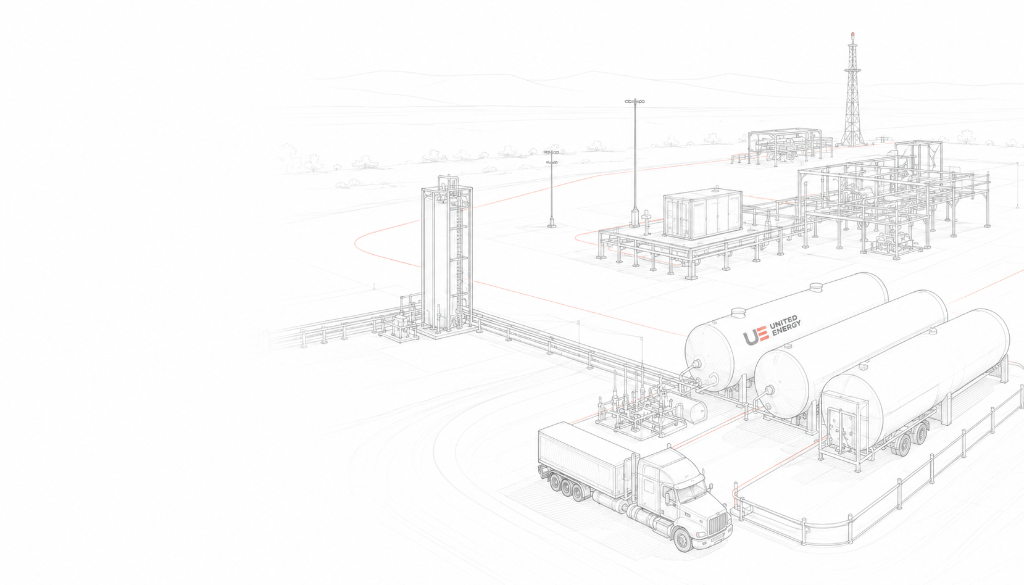
In demanding energy, industrial, aerospace and technology environments, safe execution begins long before equipment arrives on site.
Customers need confidence that contractors are prepared to meet applicable health, safety, environmental, insurance and operational requirements. That preparation includes documented procedures, trained personnel, appropriate equipment, reporting systems and the ability to demonstrate compliance before work begins.
For United Energy Operating, formerly Alkane Midstream, safety is not treated as a separate program layered onto operations. It is part of the infrastructure required to mobilize, perform and improve.
Contractor Qualification Starts Before the Field
Many leading organizations use ISNetworld to review contractor and supplier information related to health, safety, environmental performance, insurance, training and compliance.
Maintaining accurate documentation within those systems is an essential part of remaining prepared for customer qualification and approved-vendor opportunities.
United Energy Operating maintains its contractor profile and supporting records to meet applicable customer requirements across LNG logistics, distributed power, cryogenic fuel transportation and field services.
Qualification requirements can vary by customer, operating entity, location and scope of work. The common expectation is that contractors arrive prepared, documented and ready to operate responsibly.
Measuring How Safety Is Experienced
In 2025, Alkane completed an internal ISN CultureSight employee survey designed to measure employees’ perceptions of the company’s safety culture across eight areas:
- Commitment
- Accountability
- Priorities
- Competency
- Communication
- Supportive resources
- Hazard awareness
- Reporting and investigation
Employees rated the organization’s overall safety-culture maturity at 92 out of 100.
The strongest category scores were:
- 96 — Hazard Awareness
- 95 — Safety Priorities
- 94 — Reporting and Investigation
- 92 — Competency
The survey also reported:
- 91 — Commitment
- 91 — Supportive Resources
- 90 — Accountability
- 89 — Communication
CultureSight results reflect employee perceptions from an internal 2025 survey. They are not a safety-performance rating, customer certification or endorsement.
Stop-Work Authority Must Be Real
One of the most important findings was that 100% of respondents said they felt encouraged to stop a job at any time for safety reasons.
Stop-work authority only matters when employees believe they can use it without hesitation.
That means production schedules, customer demands and operating costs do not remove an employee’s responsibility to raise a concern. When conditions, instructions or equipment do not feel right, the correct response is to pause, communicate and resolve the issue before continuing.
Safety Is Built Into the Work
Strong safety cultures are supported by repeatable operating practices.
At United Energy Operating, those practices include:
Pre-Task Planning
Safe-work expectations, job hazards and required controls are reviewed before work begins.
Training and Competency
New-hire instruction, refresher training and task-specific qualifications help ensure work is performed by prepared personnel.
Documented Work Practices
Permits, job safety analyses, checklists and procedures help teams identify and control risk.
Equipment and Resources
Employees are supported with appropriate PPE, safety information and access to knowledgeable personnel.
Reporting and Learning
Incidents, near misses and field observations are used to identify causes and share lessons learned.
Stop-Work Authority
Employees are expected to pause work when a concern needs to be addressed.
The CultureSight results reflected strong employee perceptions in several of these areas, including documented safe practices, proactive hazard identification, new-hire training and the sharing of lessons learned.
Strong Results Do Not End the Work
A credible safety culture does not hide from feedback.
Employees identified opportunities to continue improving field communication, leadership visibility, housekeeping, team recognition and proactive hazard management. Those observations are useful because they show where leadership attention can make the operating environment stronger.
The goal is not to treat a strong survey result as a finish line.
The goal is to keep measuring, listening and improving.
Safety Across the Molecule-to-Megawatt Chain
United Energy’s operating model connects gas supply, transportation, storage, regasification, distributed generation and field support.
Every stage depends on:
- Trained personnel
- Documented procedures
- Reliable equipment
- Clear accountability
- Consistent communication
- The authority to stop work
That is why safety is the first infrastructure.
Before fuel moves, before equipment starts and before power is delivered, the systems supporting safe execution must already be in place.
Measure. Listen. Improve. Repeat.
Qualified Before the Work Reaches the Field
Connect with United Energy Operating to discuss contractor qualification, field capabilities and molecule-to-megawatt energy solutions.