
Data Center Power Solutions
Data center operators are rethinking their power supply architecture as AI workloads grow, grid capacity tightens, and reliability requirements intensify. This guide covers practical power solutions.
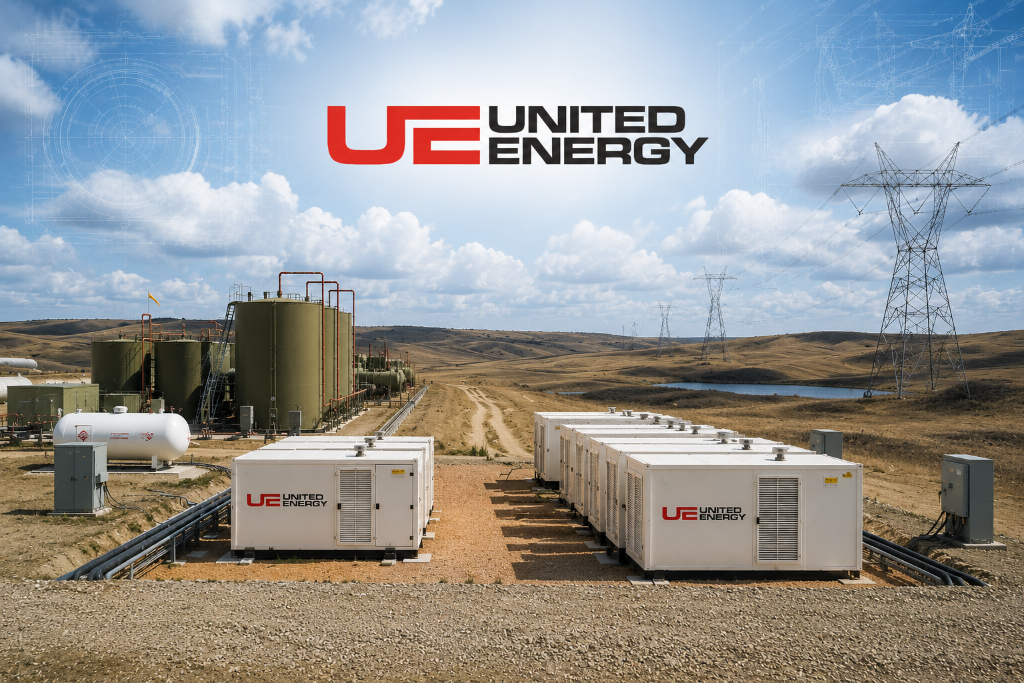
Power Solutions for Modern Data Centers
The data center power supply landscape has changed more in the past three years than in the previous two decades. AI workloads have created power density requirements that older facilities and infrastructure paradigms cannot accommodate. Grid interconnection delays have pushed operators toward on-site generation. ESG commitments are driving fuel transitions away from diesel. These converging pressures are forcing a comprehensive rethinking of data center power supply architecture.
This guide covers the practical power supply options available to data center operators, from traditional approaches to emerging solutions that address the specific challenges of AI-era data center infrastructure.
Solution 1: Utility Grid Connection (Traditional Approach)
Grid power remains the lowest marginal cost electricity source for locations with available capacity. A standard utility grid connection with redundant feeds serves as the primary power supply for most data centers. The challenges are well known: interconnection queue delays, capacity constraints in major markets, and grid reliability that falls short of the 99.99%+ uptime requirements of mission-critical facilities.
Solution 2: UPS and Battery Storage
UPS systems provide power conditioning and short-duration battery backup for the gap between grid failure and generator start. Battery energy storage systems (BESS) add capacity and enable energy arbitrage, demand response participation, and renewable energy integration. Battery solutions are effective for sub-1-hour backup needs but are not economically practical as the sole extended-runtime solution for large facilities.
Solution 3: Diesel Backup Generation
Diesel generator sets in standby configuration are the traditional data center backup solution. They're universally understood, supported by a mature service ecosystem, and available from multiple manufacturers. Primary limitations are the runtime governed by on-site storage, fire code constraints on storage volume, fuel degradation in storage, and emissions performance that is increasingly scrutinized.
Solution 4: Natural Gas / LNG Backup and Prime Generation
Natural gas generators fueled by pipeline gas or LNG address most diesel backup limitations: extended runtime potential, lower emissions, fuel stability (no degradation), and in markets with available LNG supply chains, lower fuel cost. For grid-constrained locations, LNG-fueled generation can serve as the primary power source, with the utility grid as backup when available.
LNG for data center power generation is increasingly being adopted by operators facing the combination of grid delays, emissions requirements, and extended runtime needs. United Energy's Energy Fulfillment™ platform provides the integrated LNG supply chain.
Solution 5: Microgrid Architecture
Microgrid systems combine multiple generation sources, storage, and intelligent control to optimize power supply reliability and cost. Data center microgrids typically include grid connection, distributed generation (gas-fueled), and battery storage, with controls that optimize dispatch based on cost, reliability, and carbon intensity goals.
Solution 6: Dedicated Power Purchase Agreements
Power purchase agreements (PPAs) with generators co-located near the data center — including natural gas peakers, gas turbine cogeneration, or in some cases dedicated renewable facilities — provide contractual power supply that can supplement or replace grid service.
Selecting the Right Solution Mix
Most data center power supply strategies combine multiple solutions: grid as the primary, LNG/gas generation as backup and extended runtime, battery for fast response and power quality, and in some cases, dedicated PPAs for cost management. The optimal mix depends on location, grid reliability, size, AI workload requirements, and ESG commitments.
Key Takeaways
- AI data center power requirements cannot be met by any single solution — multi-source architecture is increasingly standard
- LNG-fueled generation addresses grid delay, extended runtime, and emissions simultaneously
- Microgrid architectures with intelligent control optimize across multiple generation and storage assets
- Solution selection should be driven by reliability requirements, grid conditions, fuel availability, and ESG commitments
- Integrated energy providers who manage the complete fuel-to-power chain simplify data center energy management
What is the most reliable data center power architecture?
The most reliable architectures combine redundant utility feeds, 2N UPS systems, redundant backup generation (N+1 or 2N), and diverse fuel supply. For AI-scale facilities, the addition of on-site prime generation with LNG fuel supply and adequate storage provides the highest reliability tier, independent of utility grid conditions.
How fast can LNG-fueled power infrastructure be deployed?
Modular LNG storage and generation systems can be deployed in 3–6 months for smaller installations. Larger systems require longer lead times for equipment procurement and site preparation. This is substantially faster than utility grid interconnection, which takes 2–5 years in congested markets.
What is the ROI calculation for data center LNG power?
ROI depends on the alternative: for grid-constrained facilities where LNG generation enables operations that otherwise couldn't begin, the ROI comparison is revenue generation vs. capital cost. For backup applications, ROI compares avoided downtime cost against annual LNG system cost including capital, fuel, and operations.
How do data centers manage emissions from backup generation?
Air quality permits for data center generators specify emissions limits and operating hour constraints. Natural gas generators provide substantially better emissions performance than diesel, typically simplifying permit compliance. LNG supply chains provide documented fuel sourcing that supports emissions reporting and ESG verification.
Power Solutions for Your Data Center
United Energy provides complete LNG supply and distributed generation solutions for data center operators requiring reliable energy at any scale.