
Energy Security Through Distributed Power
Distributed power generation fundamentally changes the energy security equation for industrial facilities, providing independence from supply chain vulnerabilities that centralized grid systems cannot eliminate.
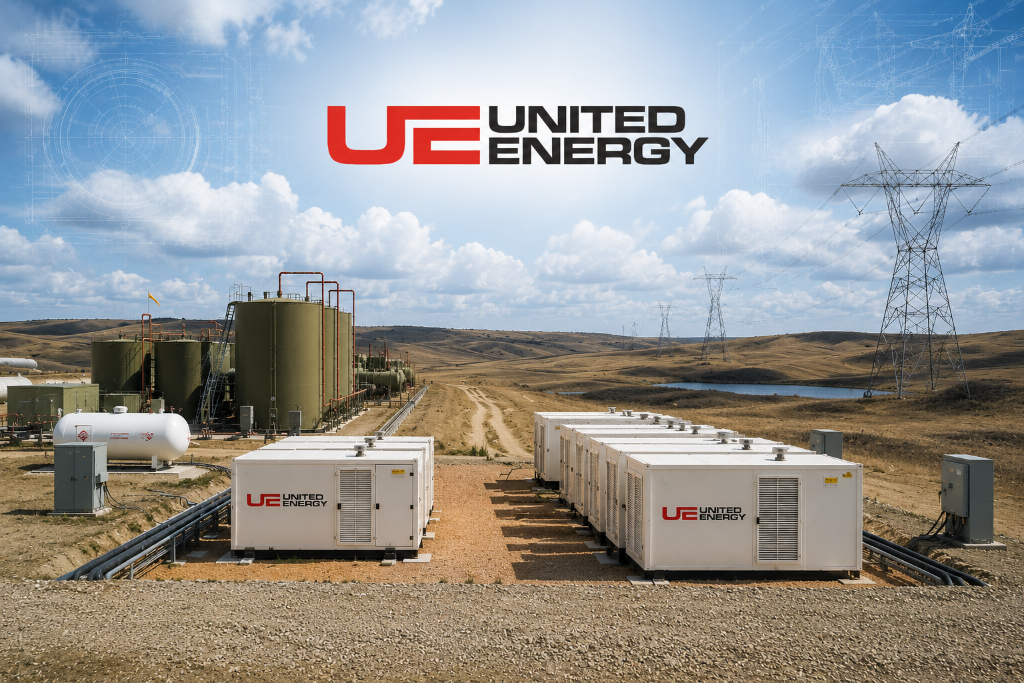
Energy Security in an Era of Grid Stress
Energy security — the reliable, continuous availability of energy at the scale and quality required for operations — has become a strategic priority for industrial operators, data center developers, and critical infrastructure operators as grid infrastructure is stressed by demand growth, aging assets, and climate-related weather events.
The utility grid, for all its scale and investment, is an inherently centralized system with distributed failure modes: any of thousands of transmission and distribution components can fail and interrupt service to end users who have no visibility into or control over grid conditions. Distributed power generation changes this equation fundamentally.
The Vulnerability of Grid Dependence
Grid-dependent facilities are exposed to failures at multiple points they cannot control or monitor:
- Transmission line failures from weather, physical damage, or equipment failure
- Substation equipment failures
- Distribution line failures
- Capacity shortfalls during peak demand periods
- Cyber attacks on grid control systems
- Weather events (ice storms, hurricanes, heat waves) that broadly affect grid infrastructure
None of these failure modes can be prevented or managed by the facility operator. The only way to eliminate their impact is to reduce or eliminate grid dependence.
How Distributed Power Enhances Energy Security
Distributed power generation enhances energy security by:
- Shortening the power delivery path: Generation co-located with consumption eliminates most of the infrastructure that can fail between a central plant and the end user
- Creating on-site fuel reserves: LNG storage provides days to weeks of operational fuel independent of supply chain events
- Enabling island mode operation: The ability to disconnect from the grid and operate independently eliminates grid failure as a cause of facility outage
- Diversifying supply: Multiple generation assets and fuel supply sources eliminate single points of failure
LNG as the Security Fuel
For distributed generation systems, LNG is uniquely well-suited as the security fuel because it can be stored on-site in liquid form for days to weeks at a time. Pipeline gas provides no storage — it is only available as long as the pipeline is operating. Diesel provides storage but is constrained by fire code volume limits in most installations. LNG provides large-volume energy storage without the fire code constraints of diesel, enabling the fuel reserves needed for true energy security.
United Energy's Energy Fulfillment™ platform is designed specifically to provide this security: integrated supply chain from gas procurement through on-site liquid storage and power delivery.
Measuring Energy Security
Energy security can be quantified through metrics including:
- Energy supply resilience score: The ability to maintain operations across defined disruption scenarios
- Maximum independent operation time: Duration the facility can operate entirely on stored fuel and on-site generation
- Single points of failure: Components whose failure would interrupt energy supply
- Mean time to recovery: Average time to restore supply after a disruption
Key Takeaways
- Grid dependence exposes facilities to failure modes they cannot control at multiple points in the transmission and distribution chain
- Distributed power shortens the power path and enables island-mode independence from grid conditions
- LNG provides large-volume on-site fuel storage that enables sustained independent operation
- Energy security metrics provide quantifiable benchmarks for assessing and improving resilience
- End-to-end integrated supply chain management is essential to achieving high energy security through distributed power
How long can a facility operate on LNG storage alone?
Duration depends on storage tank size and facility energy consumption. For a facility consuming 1,000 gallons per hour of LNG-equivalent energy and maintaining 50,000 gallons of on-site storage, independent operation duration is approximately 50 hours. Larger storage and lower consumption extend independent operation time proportionally.
What is the difference between energy reliability and energy security?
Energy reliability refers to continuous availability under normal operating conditions. Energy security is the broader concept of maintaining energy supply through adversarial scenarios, infrastructure failures, supply chain disruptions, and extraordinary events. High security implies high reliability, but also resilience to disruptions beyond normal operating variance.
Is distributed power more secure than grid power?
For most industrial applications, properly designed distributed generation with on-site fuel storage provides higher effective energy security than grid power alone. The key is proper design: sufficient generation redundancy, adequate fuel reserves, and supply chain management that ensures fuel replenishment before storage falls to critical levels.
How does fuel supply chain security affect distributed energy security?
Distributed generation is only as secure as its fuel supply. A generator with empty fuel tanks provides no energy security. Ensuring fuel supply security requires: adequate on-site storage buffer, reliable supply chain with demonstrated performance, contingency supply sources, and proactive inventory management.
Build Your Energy Security with United Energy
United Energy provides integrated LNG supply and distributed power systems that enhance energy security for industrial and critical infrastructure operators.