
The 3-Year Grid Problem: Why Data Centers Are Turning to Distributed Energy Infrastructure
AI-driven power demand is accelerating faster than utility infrastructure expansion. Learn why data center developers are increasingly evaluating distributed energy solutions, LNG infrastructure, and speed-to-power strategies.
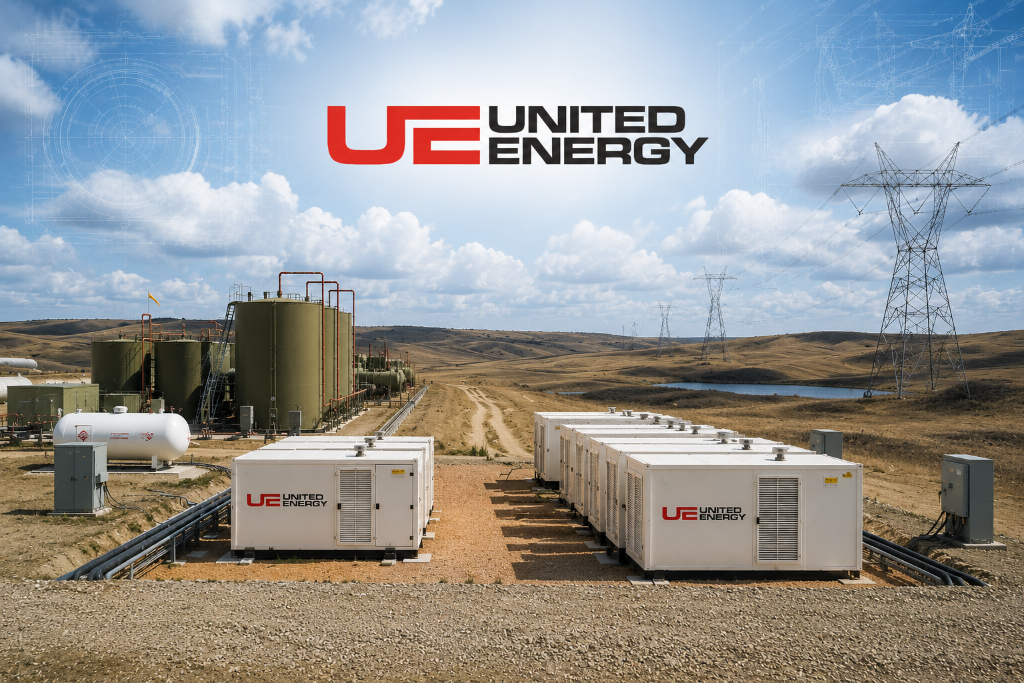
The Infrastructure Race Behind the AI Buildout
The artificial intelligence infrastructure wave is unlike anything the energy industry has seen. Hundreds of billions of dollars in data center investment are being committed globally, with hyperscalers and co-location providers racing to bring facilities online at unprecedented speed. But the conversation has quietly shifted from compute availability to something more fundamental: power.
For data center developers, operators, and the utilities that serve them, a structural tension has emerged — one that will define competitive positioning for the next decade. The challenge is not the availability of land, capital, or even customers. It is access to reliable, scalable electrical power delivered on a timeline that matches the pace of AI growth.
Why the Grid Cannot Keep Up
Electric utilities in the United States are designed around long planning horizons. Transmission infrastructure is capital-intensive, heavily regulated, and subject to interconnection queues that have grown dramatically in recent years. A new substation or high-voltage transmission line can take three to seven years from planning to energization. Interconnection studies, permitting, right-of-way acquisition, and construction timelines compound into a process that is fundamentally incompatible with the speed at which hyperscale data centers are being designed and built.
In practical terms, a data center that breaks ground today may be fully constructed and ready to operate 12 to 18 months from now — but if it is dependent on a new grid connection, it may be waiting two to three additional years before it can accept significant load. This is the 3-year grid problem: a structural timing gap between infrastructure readiness and power availability.
The gap is not hypothetical. Data center developers across the country are encountering utility queues that stretch years into the future. Substations serving high-growth markets are operating near capacity. Interconnection studies are backed up. And the acceleration in AI workloads is only intensifying demand on an already constrained system.
"The AI infrastructure race is becoming a power availability race."
The Scale of What Is Coming
To understand why this matters, it helps to look at the magnitude of power demand now in motion. Data center electricity consumption has historically grown in a measured, predictable trajectory. That pattern has changed decisively with the deployment of large-scale AI training and inference infrastructure.
Key Industry Data
- • Global data center electricity demand projected to approach 945 TWh by 2030
- • Data center electricity demand projected to grow approximately 15% annually through 2030
- • U.S. data center electricity demand projected to increase more than 130% by 2030
- • U.S. data center demand projected to exceed 80 GW by 2030
- • More than one-third of data centers expected to utilize 100% onsite power by 2030
Growth at this scale would stress any infrastructure system — but it is particularly acute for the electric grid, which was not designed to absorb demand growth of this velocity and concentration. A single large hyperscale campus can require 100 MW to 500 MW or more at full buildout. That is equivalent to the entire power demand of a medium-sized city, concentrated in a single location, needing to come online within a compressed timeframe.
The Competitive Reality for Developers
For data center developers, the energy constraint is becoming a primary site selection and development variable. Historically, developers evaluated sites based on land cost, fiber infrastructure, cooling availability, and tax incentives. Power was generally available if you were willing to work with the local utility. That assumption no longer holds universally.
In high-demand markets — Northern Virginia, Phoenix, Dallas-Fort Worth, Chicago, Atlanta, and others — available grid capacity is being absorbed quickly. Developers who move early can secure utility commitments. Those who move later may find themselves in interconnection queues with three-year or longer wait times, effectively stalling their development timelines and competitive positioning.
"Developers can secure land, capital, and customers. Increasingly, the limiting factor is access to energy."
This dynamic is forcing a strategic recalibration across the industry. Increasingly, data center developers, hyperscalers, and co-location operators are asking a question that would have seemed unusual five years ago: can we generate our own power, and can we do it faster than the grid can deliver it?
Why Distributed Energy Is Gaining Serious Consideration
Distributed energy infrastructure — specifically natural gas and LNG-fueled generation deployed on-site — offers a fundamentally different timeline than utility grid expansion. Rather than waiting for transmission upgrades, substation construction, and interconnection approvals, distributed generation can be installed, commissioned, and producing power in a fraction of the time.
The model is not new. Industrial facilities, hospitals, and remote operations have used on-site generation for decades. What is new is the scale at which it is being considered for data center applications, and the sophistication of the integrated energy delivery systems now available to support it.
Modern distributed energy for data center applications includes several integrated components:
- LNG fuel supply and logistics: Reliable, contracted delivery of liquefied natural gas to the site, replacing dependence on pipeline infrastructure where pipeline access is constrained.
- On-site regasification: Converting LNG to natural gas at the point of use, enabling fuel storage and flexible drawdown independent of real-time pipeline supply conditions.
- Distributed power generation: Gas turbine, gas engine, or other generation technologies deployed at the scale required by the facility — scalable from single-digit MW to hundreds of MW.
- Integrated operations: Single-operator accountability for fuel supply, logistics, generation, and ongoing maintenance, eliminating the coordination complexity of multi-vendor arrangements.
Speed to Power: The New Competitive Variable
The concept of "speed to power" — how quickly a facility can achieve its full operating capacity — is emerging as a critical competitive metric in data center development. For AI infrastructure specifically, where the window to capture market share is narrow and customers have alternatives, months of delay have measurable financial consequences.
Grid-dependent development involves factors that are largely outside the developer's control: utility timelines, regulatory schedules, interconnection queue positions, and construction dependencies. Distributed energy development, by contrast, involves factors that are substantially within the developer's operational control — equipment procurement, site preparation, fuel supply contracting, and installation.
This distinction matters. A developer with access to a reliable distributed energy solution can commit to power delivery timelines with a confidence that grid-dependent development cannot always match. In a competitive market for hyperscale customers, that certainty has value.
Infrastructure That Moves at the Speed of Growth
The 3-year grid problem is a structural challenge — not a temporary disruption. Utility infrastructure planning horizons are unlikely to compress to match the velocity of AI data center deployment. Grid expansion will continue, but it will continue at the pace dictated by regulatory processes, capital cycles, and construction timelines that have not fundamentally changed.
For data center developers and operators who need power on a timeline that matches their development schedules, distributed energy infrastructure represents a practical alternative. Not a permanent replacement for grid power in every context, but a serious solution for sites, markets, and situations where grid availability is constrained, delayed, or insufficient at the required scale.
As industry data suggests, a significant portion of data centers will be operating with substantial on-site generation by the end of the decade. The question for developers is not whether distributed energy will be part of the data center energy mix — it is whether they have the infrastructure relationships and operational frameworks in place to execute on it when it matters.
The energy decisions being made today will determine which facilities come online on schedule and which wait in utility queues while competitors capture market share. Speed to power is a competitive advantage. The infrastructure behind it needs to be built now.
Need Energy Infrastructure That Moves at the Speed of Growth?
United Energy Corporation delivers integrated fuel, logistics, and power solutions through its Energy Fulfillment™ platform.