
14 Factors Driving Data Center Energy Demand
Data center power consumption is growing faster than any other sector of the economy. These 14 factors explain why energy demand from data centers is accelerating and shows no sign of slowing.
Why Data Center Energy Demand Is Surging
Data center power consumption has grown from a minor fraction of US electricity demand to a major and rapidly growing share. Analysts project that data centers could consume 8–12% of total US electricity by 2030, up from approximately 2–3% today. Understanding the specific factors driving this demand growth is essential for energy infrastructure providers, utility planners, and investors positioning for this structural shift.
Factor 1: AI Model Training Workloads
AI large language model (LLM) training requires weeks of continuous GPU-intensive computation. A single training run for a frontier AI model may consume millions of GPU-hours of compute at 300–500W per GPU. The computational demand of AI model training has grown exponentially and is the dominant driver of new data center power demand.
Factor 2: AI Inference at Scale
After training, AI models must run continuously to serve user queries — inference workloads. ChatGPT-scale inference serving millions of daily users requires massive compute infrastructure operating continuously. As AI application adoption grows, inference infrastructure demand grows proportionally.
Factor 3: Cloud Computing Growth
Enterprise cloud adoption continues to grow as businesses migrate workloads from on-premises data centers to hyperscale cloud providers. Each migrated workload adds to hyperscaler data center demand — even when the total compute workload is similar, hyperscale consolidation of fragmented on-premises infrastructure typically increases power density and efficiency, but at the cost of larger aggregate facilities.
Factor 4: GPU Density Increases
AI-optimized server racks housing NVIDIA H100, H200, and Blackwell GPUs consume 30–100+ kW per rack — versus 2–5 kW for traditional servers. Even if the number of racks in a data center stays constant, upgrading to AI infrastructure multiplies power consumption by 10–50x per rack.
Factor 5: Video Streaming and Delivery
High-definition and 8K video streaming consumes substantial compute and bandwidth at video transcoding facilities and CDN (content delivery network) edge nodes worldwide. As video quality increases and streaming adoption grows globally, this underlying compute demand grows continuously.
Factor 6: Financial Services and High-Frequency Trading
Financial institutions operate large data center fleets for transaction processing, risk modeling, high-frequency trading, and regulatory compliance workloads. These applications require the highest available reliability and low-latency connectivity, driving premium data center infrastructure investment.
Factor 7: IoT Data Processing
The Internet of Things — billions of connected sensors, cameras, industrial monitors, and consumer devices — generates enormous data volumes that must be processed, stored, and analyzed. IoT data processing drives both edge computing infrastructure and central data center workloads.
Factor 8: Healthcare and Life Sciences Computing
Genomics, drug discovery, medical imaging AI, and clinical data analytics are driving significant growth in specialized compute infrastructure in the healthcare and life sciences sector. This sector is increasingly dependent on high-performance computing infrastructure for research and clinical operations.
Factor 9: Autonomous Vehicle Data Processing
Autonomous vehicle development and operation requires processing enormous volumes of sensor data — from lidar, cameras, and radar on vehicle fleets — in near-real-time. The infrastructure required for AV data ingestion, processing, and model training is substantial and growing with autonomous vehicle deployment.
Factor 10: Digital Advertising Technology
Real-time bidding, ad targeting, fraud detection, and campaign optimization platforms process billions of advertising transactions daily. This high-volume, low-latency processing creates sustained data center demand from the digital advertising ecosystem.
Factor 11: Government and Defense Computing
Intelligence agencies, defense departments, and government services are significant data center operators requiring classified and sensitive facility infrastructure. Government computing demand grows with cybersecurity requirements, surveillance applications, and AI adoption within government operations.
Factor 12: Blockchain and Distributed Ledger
While cryptocurrency mining demand has fluctuated, blockchain transaction validation for financial services, supply chain, and identity applications creates ongoing compute demand. Financial institution blockchain infrastructure is growing as institutional adoption matures.
Factor 13: Edge Computing Expansion
As latency requirements for real-time applications tighten, computing is migrating closer to users and devices — creating thousands of small 'edge' data centers in telecom facilities, commercial buildings, and industrial sites. These edge deployments aggregate substantial total power demand even in small individual increments.
Factor 14: Digitization of Traditional Industries
Manufacturing, logistics, agriculture, and energy are deploying digital operations platforms, AI-powered optimization, predictive maintenance systems, and connected equipment at scale. The data processing requirements of industrial digitization are creating sustained growth in data center demand independent of consumer-facing digital services.
Implications for Energy Infrastructure
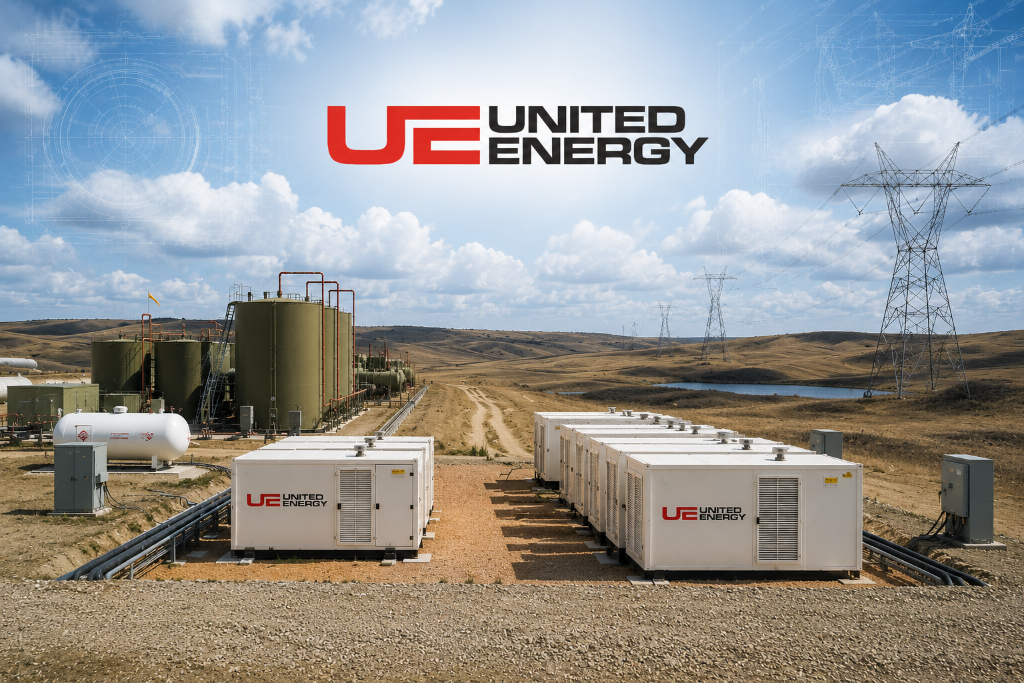
These 14 demand drivers collectively create energy infrastructure requirements at a scale that the existing grid cannot accommodate on current timelines. Distributed LNG-to-power solutions are increasingly the answer for data center operators who cannot wait years for grid capacity. United Energy's infrastructure positioning addresses this structural demand.
Key Takeaways
- AI training and inference are the most powerful near-term demand drivers, with workloads growing exponentially
- GPU density increases are multiplying power consumption per rack by 10–50x versus traditional servers
- 14 distinct and independent demand factors are growing simultaneously, providing broad structural support for demand growth
- Grid capacity constraints in major markets require distributed and on-site generation solutions for new data centers
- Data center energy demand growth represents a multi-decade tailwind for energy infrastructure investment
How much electricity does a hyperscale data center consume?
Hyperscale data centers consume 100–500 MW of power. New AI-optimized facilities are being designed at 500 MW to 1 GW+ scale. At 500 MW, a single data center consumes as much electricity as a city of approximately 400,000 people.
Is data center energy demand growth sustainable?
Data center energy efficiency has improved substantially over time (PUE ratios improved from 2.0+ to 1.1–1.3 at modern hyperscale facilities). However, efficiency gains have been more than offset by absolute demand growth as the digital economy expands. Most forecasters project continued net demand growth despite efficiency improvements.
What is the relationship between AI chip advances and power consumption?
More powerful AI chips enable larger models and faster inference, but they also consume more power per chip and often run in denser configurations. The net effect of each GPU generation has been increasing power consumption per rack and per facility, even as performance-per-watt improves.
How are data center operators responding to grid constraints?
Data center operators are pursuing several strategies: engaging with utilities for long-term power purchase agreements with dedicated transmission, investing in on-site distributed generation (natural gas, LNG), exploring direct connection to power generation assets (power purchase agreements with generators co-located near data centers), and in some cases, delaying facility construction pending grid capacity availability.
What role does LNG play in data center energy supply?
LNG-fueled generators provide backup power, prime power (in grid-constrained locations), and fuel diversity for data centers requiring reliability beyond what diesel alone can provide. LNG supply chains enable extended runtime capability and lower emissions compared to diesel-only backup, making them increasingly attractive for large data center operators with ESG commitments.
Energy Infrastructure for Data Center Growth
United Energy provides LNG fuel supply and distributed generation solutions for data center operators navigating grid capacity constraints.