
Energy Infrastructure for AI Data Centers
AI data centers have fundamentally different energy requirements than traditional compute facilities. Understanding these requirements is essential for infrastructure developers and energy providers.
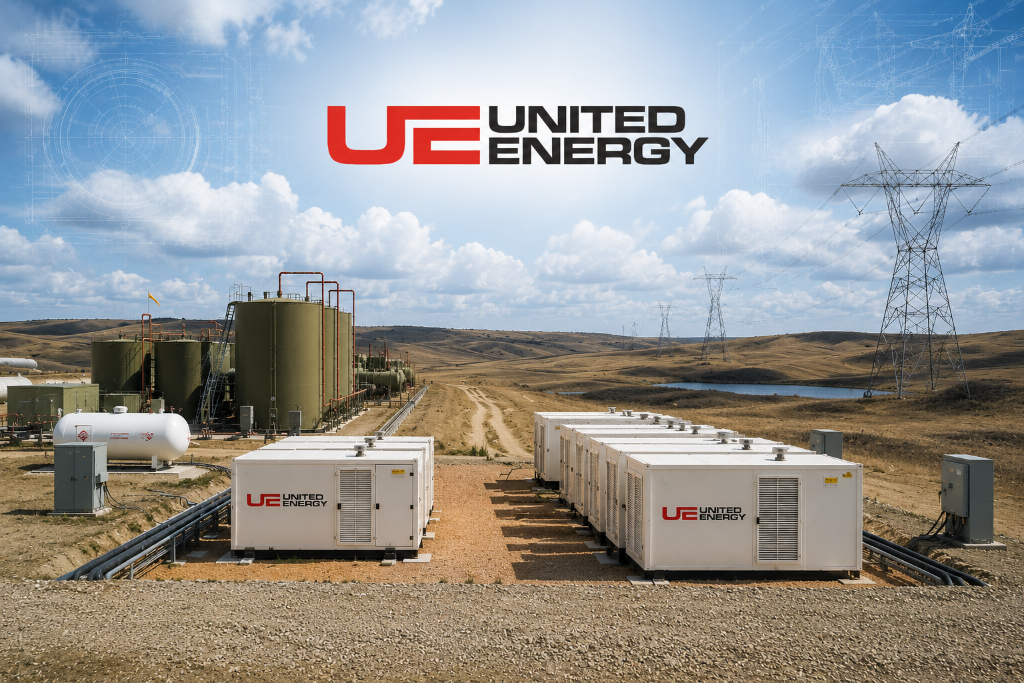
How AI Is Changing Data Center Energy Requirements
Artificial intelligence workloads are transforming data center energy infrastructure requirements more profoundly than any technology shift since the original digitization of business operations. The computing power required to train and run AI models is orders of magnitude greater than traditional enterprise computing, and the corresponding power density — kilowatts per square foot, kilowatts per rack — has increased by similar proportions.
For energy infrastructure providers, this shift creates urgent and massive demand. For data center developers, it creates planning and procurement challenges that require rethinking power supply architecture from first principles.
AI Compute Power Density
The fundamental driver is power density. Traditional server racks consume 2–5 kW per rack. Racks populated with NVIDIA H100 or H200 GPUs for AI training consume 30–60 kW per rack. Next-generation Blackwell GPU clusters can exceed 100 kW per rack. A 1,000-rack AI training facility that would have consumed 5 MW with traditional servers now consumes 50–100 MW with AI accelerators — a 10–20x increase.
Cooling Infrastructure Implications
High power density AI clusters require liquid cooling rather than traditional air cooling. Direct liquid cooling (DLC), rear-door heat exchangers, and immersion cooling systems replace traditional CRAC/CRAH units for AI server infrastructure. These cooling systems are themselves significant energy consumers and require substantial additional infrastructure investment alongside the power supply systems.
Power Supply Architecture for AI
AI training workloads have specific power supply requirements that differ from traditional data center loads:
- Continuous full-load operation: AI training jobs run at maximum GPU utilization for weeks continuously — there is no low-power idle mode to provide averaging relief
- Zero-interruption requirement: Training job interruptions force expensive restarts from the last checkpoint, making continuous power a core operational requirement
- Scalable capacity: AI infrastructure is typically built in phases, requiring power infrastructure that can scale without long lead times
Grid Capacity Challenges
New large-scale AI data center projects are encountering years-long grid interconnection queue delays in most major markets. Utilities in Northern Virginia, Phoenix, Dallas, Chicago, and other data center markets report interconnection queues measured in years for large loads. This constraint is not quickly resolved — transmission upgrades require years of permitting, engineering, and construction.
This constraint is driving AI data center operators toward distributed generation as a primary power source rather than a backup. LNG-fueled generation can be deployed in months rather than years, making it increasingly attractive as a bridge to grid connection and potentially as a permanent primary power source for some facilities.
LNG Infrastructure for AI Data Centers
LNG-to-power systems designed for AI data center applications require:
- Large on-site LNG storage (sized for days to weeks of runtime at AI load levels)
- High-reliability regasification systems with redundancy
- Natural gas generator infrastructure sized for the full facility load plus redundancy margin
- Reliable LNG supply chain with frequent delivery capability
United Energy's Energy Fulfillment™ platform provides the integrated supply chain to support these requirements.
Key Takeaways
- AI GPU clusters consume 10–20x more power per rack than traditional servers, creating unprecedented power density requirements
- AI training workloads require continuous uninterrupted power — interruptions waste weeks of compute time
- Grid interconnection queue delays of 2–5 years in major markets are driving AI data centers toward distributed generation
- LNG-to-power systems can be deployed in months, providing a faster path to power than grid interconnection
- AI data center power infrastructure requires planning for both current and future power density levels
How much power does a large AI data center consume?
New AI-optimized data centers are being designed at 200–1,000 MW and larger. At 500 MW, a single AI data center consumes as much power as a medium-sized city. This scale is creating energy procurement challenges that require energy infrastructure planning at utility scale.
Why can't AI data centers simply wait for grid connections?
AI infrastructure has a short competitive window — AI companies need to deploy compute capacity quickly to remain competitive. A 3–5 year grid interconnection delay represents an unacceptable development timeline. LNG-fueled distributed generation deployable in months allows AI operators to begin operations while grid connection is in progress.
What is the cost of powering an AI data center with LNG generation?
Power cost from LNG generation depends on natural gas prices, generator efficiency, and capital cost. At typical US natural gas prices and modern combined cycle or reciprocating engine efficiency, natural gas generation can produce electricity at costs that are competitive with retail grid pricing for large industrial consumers. Exact costs depend on local gas prices and facility design.
How does LNG power compare to renewable energy for AI data centers?
Solar and wind provide intermittent power that requires storage or backup to serve the continuous, full-load requirements of AI training. Natural gas LNG-fueled generation provides dispatchable, continuous power that matches AI workload requirements without the storage costs associated with renewable alternatives. Many operators combine renewable and gas generation in their power strategies.
Power Infrastructure for AI Data Centers
United Energy provides LNG fuel supply and distributed power solutions for AI data center operators requiring fast-deployment, reliable energy.