
What Is LNG Regasification?
LNG regasification is the process of converting liquefied natural gas back into its gaseous state for distribution and end use. This guide explains how regasification works and its industrial applications.
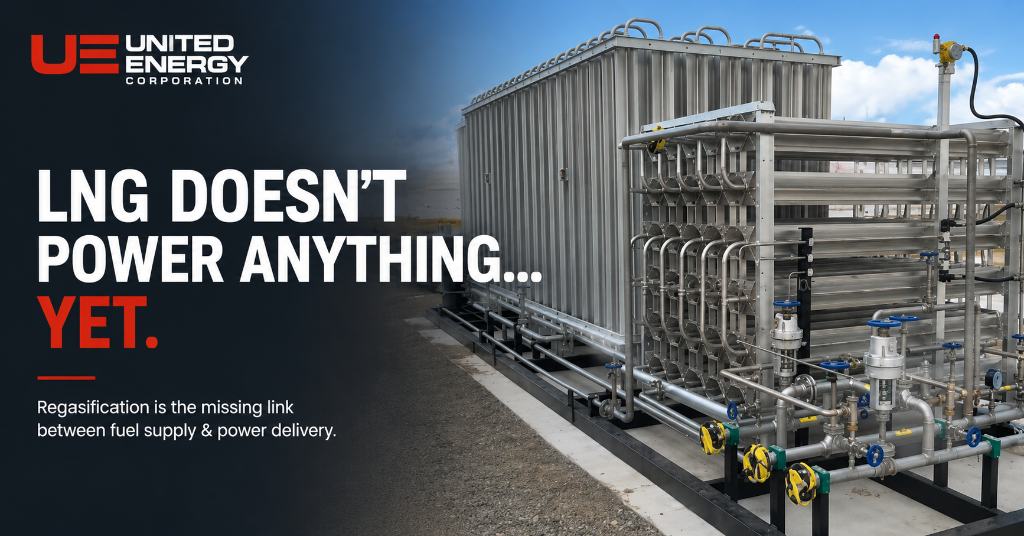
What Is LNG Regasification?
LNG regasification is the process of converting liquefied natural gas (LNG) — stored at approximately -260°F — back into its gaseous state so it can be used as fuel, feedstock, or pipeline gas. Regasification is the final step in the LNG supply chain, bridging the gap between the stored liquid and the end-use equipment that requires gaseous natural gas.
The term 'regasification' is sometimes used interchangeably with 'vaporization' — both describe the same fundamental process of adding heat to LNG until it crosses from liquid to gas phase. The process is straightforward thermodynamically: LNG absorbs heat from its surroundings and converts to gas. The engineering challenge is doing this at controlled rates, pressures, and temperatures appropriate for the end-use application.
How Regasification Works
LNG vaporizes when it absorbs sufficient heat to cross the liquid-to-gas phase boundary. At atmospheric pressure, this occurs at approximately -260°F — meaning any heat input above that temperature will cause vaporization. Practical regasification systems exploit this thermodynamic property using several different heat source approaches.
Ambient Air Vaporizers
Ambient air vaporizers (AAVs) use atmospheric air as the heat source. LNG flows through finned tube heat exchangers exposed to ambient air, which is always warmer than the LNG even at extreme winter temperatures. AAVs require no fuel input and have low operating costs, but their capacity is limited in cold climates where the temperature differential between LNG and ambient air is reduced.
Water Bath Vaporizers
Water bath vaporizers heat LNG by circulating it through tubes submerged in a water bath heated by natural gas burners or steam. These systems can achieve high vaporization rates independent of ambient temperature and are common in large industrial and utility applications.
Direct-Fired Vaporizers
Direct-fired vaporizers use gas burners to heat LNG directly. They can achieve high throughput rates and are well-suited for applications requiring large gas volumes or operating in very cold climates where AAVs are insufficient.
Intermediate Fluid Vaporizers
Some large-scale regasification systems use an intermediate fluid — typically propylene glycol or seawater in coastal facilities — as the heat transfer medium between the heat source and the LNG.
Mobile and Modular Regasification Systems
Mobile regasification systems represent one of the most important developments in small-scale LNG infrastructure. Rather than requiring permanent facility installation, mobile systems are mounted on skids or trailers and can be transported to any site where LNG is being delivered and consumed.
This mobility is critical for industrial applications where LNG must be deployed at remote or temporary locations — oil field operations, construction power plants, industrial process facilities awaiting pipeline connection. A mobile regasification system allows LNG to be delivered by truck and immediately converted to pipeline-quality gas at any location.
Regasification Flow Rates and Capacity
Regasification systems are sized based on peak gas demand at the end-use facility. Key parameters include:
- Maximum continuous vaporization rate (expressed in gallons per hour or MMBtu/hr of natural gas output)
- Outlet pressure (must match distribution system and end-use equipment requirements)
- Inlet LNG temperature and pressure
- Ambient temperature range (affects AAV performance)
Properly sized regasification systems include flow control, pressure regulation, and safety relief systems to ensure consistent gas delivery quality across varying demand conditions.
Regasification in the LNG Supply Chain
In integrated LNG-to-power systems, regasification is the critical interface between the fuel supply chain and the generation equipment. The complete chain is: LNG production → cryogenic truck delivery → on-site LNG storage → vaporization/regasification → gas distribution → generation equipment → power output.
Each element of this chain must be properly sized, operated, and maintained for the overall system to function reliably. Regasification equipment that is undersized for peak demand creates bottlenecks; oversized systems incur unnecessary capital cost.
Safety in LNG Regasification
LNG regasification systems are designed and operated under NFPA 59A standards in the United States. Key safety systems include pressure relief devices, emergency shutoff valves, gas detection systems, and remote monitoring capabilities. Proper operator training and adherence to safety procedures is as important as equipment design in maintaining safe operations.
Key Takeaways
- Regasification converts LNG from its liquid state (-260°F) back to usable natural gas
- Multiple vaporizer technologies serve different applications and temperature environments
- Mobile regasification systems enable LNG deployment at any truck-accessible location
- Regasification capacity must be sized to meet peak gas demand at the facility
- NFPA 59A provides the regulatory framework for safe LNG regasification operations in the US
How long does LNG regasification take?
LNG vaporization is a continuous process — LNG flows from storage through the vaporizer and emerges as gas in a matter of seconds to minutes depending on flow rate and system design. There is no batch processing time; regasification systems deliver gas continuously at rated capacity.
Does regasification require electricity?
It depends on the vaporizer type. Ambient air vaporizers require minimal or no electrical power. Water bath and direct-fired vaporizers require fuel (typically natural gas) for heating, plus electrical power for pumps and controls. Overall energy consumption for regasification is a small fraction of the energy content of the LNG being vaporized.
What pressure does regasified LNG enter the distribution system?
Outlet pressure from regasification systems varies based on end-use requirements. Industrial gas distribution systems typically operate at pressures from 5 to 100 psig depending on the application. Generators and turbines may require specific inlet pressures defined by equipment manufacturers.
Can regasification equipment be rented or leased?
Yes. Mobile and modular regasification equipment is available from LNG system providers on rental, lease, or purchase arrangements. This flexibility allows industrial operators to deploy LNG capability without the capital commitment of purchasing equipment outright.
What is the efficiency of LNG regasification?
LNG regasification is highly efficient — essentially all of the LNG introduced into a vaporizer is converted to usable natural gas. The primary energy input (heat for vaporization) is a small fraction of the fuel energy content of the resulting gas. Unlike electricity generation, regasification does not involve significant energy conversion losses.
Mobile Regasification Solutions for Your Operation
United Energy provides complete LNG regasification systems — from on-site permanent installations to mobile units deployable within days.