
Benefits of Distributed Power Generation
Distributed power generation provides industrial and remote operations with energy advantages that centralized grid power cannot match. This guide details the specific benefits across reliability, cost, and operations.
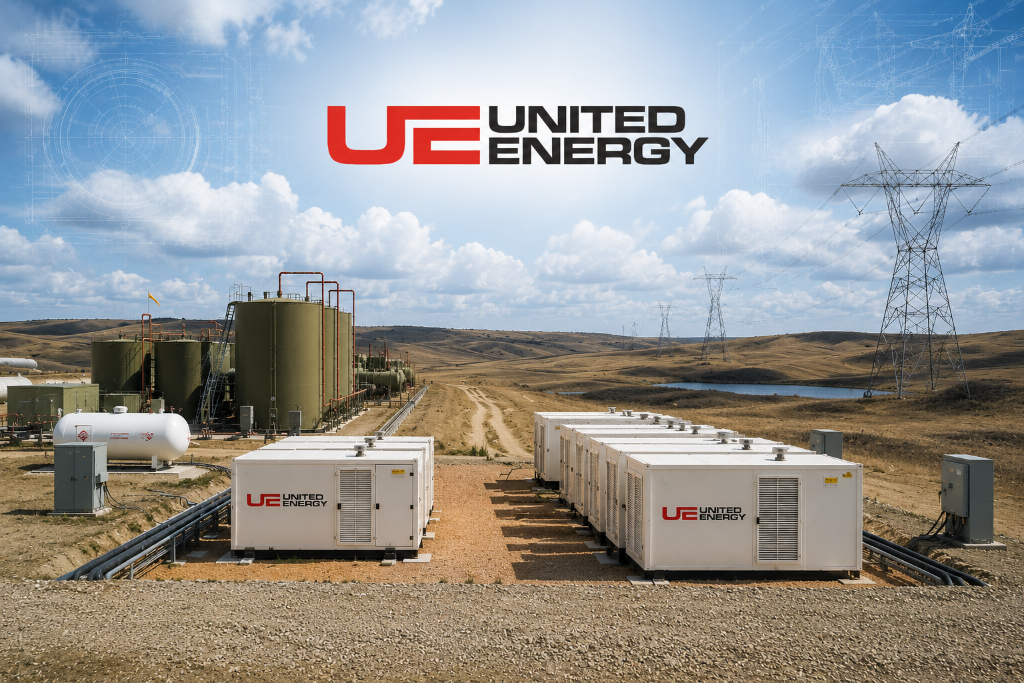
Why Distributed Power Generation Matters
Distributed power generation — electricity produced at or near the consumption point rather than at a distant central plant — is not a new concept, but it is experiencing rapid growth driven by grid capacity constraints, energy security concerns, and the maturation of natural gas and LNG generation technologies.
For industrial operators, data centers, and remote energy users, distributed generation provides a set of benefits that centralized grid power structurally cannot offer. Understanding these benefits provides the foundation for sound energy infrastructure decision-making.
Benefit 1: Energy Independence from Grid Reliability Constraints
The most fundamental benefit of distributed power is independence from utility grid reliability. Industrial operations that generate their own power are immune to grid outages, voltage sags, frequency events, and the broader consequences of grid infrastructure vulnerability. For critical processes where the consequence of power interruption is high, this independence is not a luxury — it is a requirement.
Benefit 2: Geographic Reach Beyond Grid Infrastructure
The utility grid reaches approximately 98% of US buildings. The remaining 2% — and the many more that have grid access but insufficient grid capacity for their needs — can only be served by distributed generation. Remote oil field facilities, mining operations, agricultural processors, and new industrial developments in areas with grid capacity constraints all require distributed power as their primary power supply.
Benefit 3: Faster Deployment Than Grid Infrastructure
New grid interconnections for large industrial users in capacity-constrained markets face multi-year queue timelines. Distributed generation, particularly modular natural gas systems, can be deployed in weeks to months — enabling industrial operations to proceed without waiting for grid infrastructure development.
Benefit 4: Controlled Power Quality
On-site generation provides complete control over power quality parameters — voltage, frequency, harmonic content — that utility grid power cannot guarantee. For manufacturing processes sensitive to power quality variations or data center equipment with stringent power specifications, on-site generation provides quality assurance that grid power cannot.
Benefit 5: Reduced Transmission Loss
Electricity transmitted over long distances from centralized plants incurs transmission losses — typically 5–10% of generated power. Generation located at the consumption site eliminates this loss, improving overall energy conversion efficiency. At large scale, this efficiency advantage is economically significant.
Benefit 6: Scalability to Match Load Growth
Distributed generation capacity can be added in modular increments to match load growth. Rather than building generation capacity years ahead of anticipated demand (as large central plants require), distributed systems can grow with actual demand — improving capital efficiency and reducing the risk of stranded capacity investment.
Benefit 7: Lower Exposure to Grid-Wide Events
Large-scale grid events — regional blackouts caused by extreme weather, cyberattacks on grid infrastructure, or equipment failures at major transmission facilities — affect all grid-dependent users simultaneously. Distributed generation provides a hedge against these systemic events that grid power cannot.
Benefit 8: Potential for Heat Recovery (CHP)
Distributed generation facilities located at industrial campuses can capture waste heat from generation equipment for process heating, space heating, or cooling applications. This combined heat and power (CHP) approach achieves overall energy conversion efficiencies of 70–80%, dramatically improving the economics of distributed generation for facilities with thermal energy needs.
Fuel Supply: The Critical Enabler
The reliability of any distributed generation system is ultimately determined by the reliability of its fuel supply. A natural gas generator is only as reliable as the gas that fuels it. For LNG-fueled distributed generation, integrated fuel supply management — from LNG production through cryogenic logistics and on-site storage to regasification — is as important to system reliability as the generation equipment itself.
Key Takeaways
- Energy independence from grid reliability, geographic reach, and faster deployment are the most compelling operational benefits of distributed generation
- Power quality control and reduced transmission losses provide efficiency advantages over centralized power
- Modular scalability enables demand-matched capacity investment without overbuilding
- CHP integration can dramatically improve distributed generation economics for facilities with thermal energy needs
- Fuel supply chain reliability is the critical enabler of distributed generation performance
Is distributed generation suitable for all industrial facilities?
Distributed generation is most clearly justified for: remote facilities without grid access, facilities requiring higher reliability than the grid provides, large facilities facing multi-year grid interconnection delays, and operations requiring specific power quality guarantees. Grid-connected facilities with reliable, adequate grid service may find grid power more economical for base-load applications.
What size distributed generation systems are practical?
Commercial and industrial distributed generation systems range from 50 kW to 100+ MW. Natural gas generator sets for industrial applications are commonly available in 1–20 MW modules, which can be combined for larger installations. The practical lower bound is set by economics (infrastructure fixed costs must be justified) and the upper bound by site and fuel logistics constraints.
How does distributed generation affect property taxes and regulations?
On-site generation equipment may be subject to property taxes as real property or business personal property depending on jurisdiction. Federal and state incentives (investment tax credits, accelerated depreciation) may partially offset these costs for certain qualified systems. Regulatory requirements for interconnected generation (if grid-connected) add permitting complexity.
Can distributed generation provide both backup and prime power?
Yes. Distributed generation systems can be designed for prime power (serving as the primary power supply continuously), backup power (operating only when grid power fails), or dual-mode (serving as primary power with the grid as backup or vice versa). The appropriate mode depends on the facility's power cost economics and reliability requirements.
Distributed Power Generation for Industrial Operations
United Energy designs, deploys, and operates distributed LNG-to-power systems for industrial, data center, and remote applications.