
Temporary Gas Supply Solutions
Temporary natural gas supply is a critical capability for facilities facing pipeline maintenance windows, emergency disruptions, or commissioning periods before permanent pipeline connection.
When Temporary Gas Supply Is Needed
Industrial facilities depend on continuous natural gas supply for process heat, power generation, and operations. When that supply is interrupted — whether by planned pipeline maintenance, an unexpected failure, or the absence of pipeline service during a new facility's commissioning period — the consequences can be severe: production shutdowns, equipment damage, missed deliveries, and significant financial loss.
Temporary gas supply using LNG delivered by truck and regasified on-site is the most practical and fastest-response solution for these situations. A temporary LNG supply system can be operational within days, providing natural gas supply that is functionally identical to pipeline gas for all end-use equipment.
Application 1: Pipeline Maintenance and Planned Outages
Gas utilities and pipeline operators periodically require maintenance windows that interrupt supply to connected customers. For industrial facilities on firm contracts, these planned outages may be covered by curtailment compensation — but the operational impact of a production shutdown may far exceed any compensation. Temporary LNG supply during planned pipeline outages allows industrial operations to continue through the maintenance period.
Application 2: Emergency Pipeline Repair
Unexpected pipeline failures — from corrosion, third-party damage, weather events, or equipment failure — can interrupt gas supply to industrial facilities with no advance notice. Emergency LNG supply deployed within 24–48 hours of a pipeline failure can maintain critical operations while pipeline repairs are completed.
Application 3: Facility Commissioning and Startup
New industrial facilities often reach equipment-ready status before their permanent pipeline connection is complete. Temporary LNG supply during the commissioning and startup period allows operators to begin producing revenue while waiting for permanent pipeline service.
Application 4: Peak Demand Supplementation
Industrial facilities on interruptible pipeline tariffs risk gas curtailment during cold weather peak demand periods. Supplementing pipeline supply with on-site LNG storage during these periods ensures continuous operations through curtailment events.
How Temporary LNG Supply Is Established
A temporary LNG supply system consists of:
- Portable LNG storage tank (trailer-mounted or skid-mounted, delivered to site)
- Mobile regasification unit that converts LNG to gas
- Connection to facility gas distribution system
- Safety systems and monitoring
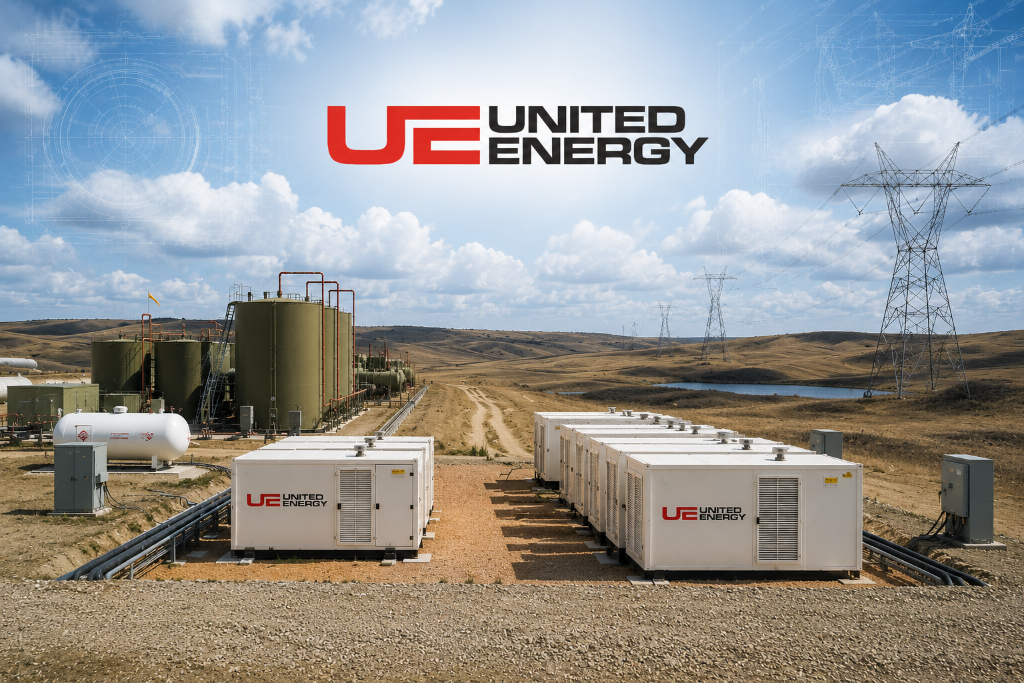
Setup time from equipment delivery to gas delivery is typically 1–5 days depending on site conditions and connection complexity. United Energy's operational capabilities include mobile LNG supply deployment for emergency and temporary applications.
Key Takeaways
- Temporary LNG supply is deployable within 24–48 hours for emergency pipeline failures
- Applications include planned maintenance outages, emergency repairs, new facility commissioning, and peak demand supplementation
- A complete temporary system includes portable storage, mobile regasification, and connection to the facility gas system
- Temporary LNG is functionally identical to pipeline gas for all standard industrial combustion equipment
- Pre-establishing relationships with qualified LNG providers before an emergency dramatically reduces response time
How quickly can temporary LNG supply be established?
For emergency response, temporary LNG supply can typically be operational within 24–48 hours of mobilization if equipment is available and site access permits. Standard setup for planned temporary applications takes 3–5 days. Pre-established relationships with LNG providers and pre-arranged site connections dramatically reduce emergency response time.
Is temporary LNG the same quality as pipeline gas?
Yes. LNG regasified on-site produces pipeline-quality natural gas chemically identical to utility supply. End-use equipment does not distinguish between pipeline gas and LNG-sourced gas, and no equipment modifications are required when switching between sources.
What is the cost of temporary LNG supply versus pipeline gas?
Temporary LNG supply is more expensive than normal pipeline service due to the logistics and equipment costs of the mobile supply system. However, compared to the cost of production loss during an outage, temporary LNG supply is typically very cost-effective. Exact costs depend on duration, volume, and logistics distance.
How long can a temporary LNG system support a facility?
Temporary LNG systems can support facilities indefinitely as long as deliveries continue. For short-duration applications (days to weeks), a temporary system can bridge the gap at acceptable cost. For longer-duration needs, permanent LNG infrastructure may be more economical than ongoing temporary system rental.
Emergency and Temporary Gas Supply
United Energy provides rapid-deployment temporary gas supply for industrial facilities facing pipeline disruptions, maintenance outages, or commissioning gaps.